
There is a small word tucked into the book of Psalms that keeps asking us to slow down. It appears at the end of verses like a rest mark in a piece of music, and many English readers pass straight over it. The word is Selah. It refuses to fit neatly into a single English definition, yet its message may be one of the most needed in all of Scripture: stop and listen.
In a season when attention feels scattered and rest is rare, Selah offers a different rhythm. It is not a shout or a command. It is an invitation to pause mid-song, mid-psalm and mid-life, to remember who is speaking and who is listening. To understand the Selah meaning with fresh eyes, begin with the word itself and let it lead you to green pastures and still waters.
What Does Selah Mean in the Bible?
Most biblical scholars describe Selah as a Hebrew word that was probably either a liturgical-musical mark or an instruction for reading the text. The meaning that surfaces most often is the same: stop and listen. When the psalmist wrote Selah, the singers and the congregation knew that something weighty had just been declared and that the right response was holy silence.
The Hebrew background adds even more layers. Selah is a derivative of the Hebrew root salal, and it is described as a synonym of Hebrew words that mean forever. Some commentators argue that it comes from the Hebrew word salah, meaning to pause, a moment when people stopped to take a breath. A related Hebrew word, calah, means to hang or to measure or weigh in the balances. Pull these threads together and Selah starts to feel like a set of scales, a place to weigh what you have just heard.
| Possible meaning | What it invites |
|---|---|
| Pause | stop reading or singing and let the words rest |
| Stop and listen | turn your attention fully to what God has said |
| Lift up | raise praise, eyes or hands toward God |
| Forever | let the moment stretch toward the eternal |
| Weigh or measure | hold the verse in the balances and consider it carefully |
Because the exact use of Selah is uncertain, you are free to receive it as many things at once. It is a pause that lifts the heart, a silence that weighs the soul and a reminder that the God who meets you there is never in a hurry.
Where Is Selah Found in Scripture?
Selah appears in the Bible more often than many people realise. It occurs at the end of verses throughout the book of Psalms, woven into some of Israel's most beloved songs. It also appears in the book of Habakkuk, where the prophet closes portions of his prayer with the same word. In both places, Selah marks a truth that is worth sitting with.
The placement is consistent. Selah usually shows up at moments of high emotion: after a bold declaration about God, at a turning point in a plea, or at the crest of a wave of praise. The pattern suggests the Spirit is gently saying, do not rush past this. Sit here. Let it become part of you.

Why Is Selah Called a Prayer Within a Prayer?
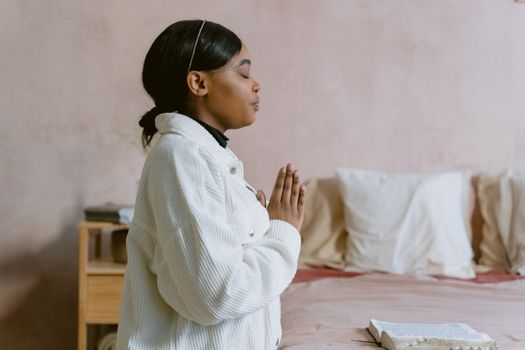
One writer describes Selah as a prayer within a prayer. It is a word that asks us to stop and listen, really listen. In this reading, Selah means 'may the ears hear and the eyes see'. It turns the reader's attention away from the page and toward the living God who speaks through it.
Each time you meet Selah in the Psalms, you are not merely reading ancient lyrics. You are being drawn into an exchange with God, asking him to open your spiritual senses before you continue. That makes Selah far more than a footnote. It is a living invitation to pay attention.
Lamed and Aleph: The Name of God Hidden in Selah
Now look at the shape of the word itself. Written in English, Selah carries five letters and a hidden treasure in its middle. The centre holds two letters, L and A. Seen through Hebrew eyes, the L becomes Lamed ל and the A becomes Aleph א . In Hebrew, Aleph and Lamed together spell (El) לא, one of the names of God. The name of the Almighty sits inside the very word that tells us to pause.
Lamed ל is one of the most striking letters in the Hebrew alphabet. It reaches upward like a shepherd's staff and stands taller than the letters around it. A staff in the hands of a good shepherd does not necessarily strike; it guides. It nudges a stray back toward the flock, steadies the walker and points the way forward.
Aleph א carries a different gift. It is the first letter of the Hebrew alphabet, the letter of beginnings. Tradition ties Aleph א to oneness, because the God who begins all things is one. Every alphabet starts with Aleph, reminding us that every story, including yours, begins with God.
Place the two letters together and the design becomes a quiet sermon. The pause of Seלאh is not empty space. It is filled with the presence of El (אל), the shepherd God who was there at the beginning of everything. The very letters of Seלאh tell you to rest in the One who made you and leads you.

Selah and the Still Waters of Psalm 23
Psalm 23 opens with words that have carried generations: 'The Lord is my shepherd; I shall not want. He makes me lie down in green pastures. He leads me beside still waters. He restores my soul.' These lines are full of rest, and they are also a picture of Selah in action.
Sheep lie down only when they feel safe, and they drink best from water that is still. A rushing current frightens them. The shepherd understands this. He leads his flock to places where quiet is possible. Selah does the same work inside the Psalms. After the battle, after the cry for rescue, after the shout of praise, Selah says: lie down in the green pasture, rest in the care of the shepherd, let the still water calm your soul.
PS23 is an Australian faith-forward apparel brand built around this psalm and the God who shepherds us. Its designs carry scripture, Hebrew language and this exact invitation: pause, rest and reflect on God. When you pause over the word Selah, you are doing what David did, stopping long enough to let the Shepherd restore your soul.
A Pause You Can Wear
PS23 turns that pause into something you can wear. The brand creates hoodies, crewneck sweatshirts and t-shirts for people who want their faith woven into everyday clothes. Hebrew letters appear across the fabric as a visible reminder of the ancient words behind every design. The bilingual Seלאh concept takes the English word, renders L as Lamed and A as Aleph, and leaves the name of God resting at the centre of the design.
It is a quiet piece of theology you can carry all day. Every glance at your sleeve can become a small Seלאh moment. And because the goodness of the Shepherd always overflows, a portion of every sale supports benevolent causes, extending the care beyond the wearer to someone in need. You can find these pieces at ps23.shop.
Frequently Asked Questions
What does Selah mean in the Bible?
Most biblical scholars agree Selah is a Hebrew word that probably acted as a liturgical-musical mark or an instruction for reading the text. Its most common sense is simple: stop and listen. It appears at the end of verses in Psalms and Habakkuk, inviting readers and singers to pause, rest and reflect on what has just been declared.
Where does Selah appear in Scripture?
Selah appears throughout the book of Psalms, most often at the end of verses. It is also found in the book of Habakkuk in the Old Testament. Because the psalms were sung, Selah probably served as a musical marker, telling the worshippers when to pause and let the weight of the words settle before moving on.
Does Selah mean pause or forever?
It can mean both. Selah is commonly understood to mean pause, and it is also described as a synonym of Hebrew words that mean forever. A related Hebrew word, calah, means to hang or to weigh in the balances. Together these meanings suggest a pause that is long enough to weigh what you have read and remember the eternal God.
How should I respond when I read Selah?
Treat Seלאh as a personal invitation to stop reading and start listening. One writer calls it a prayer within a prayer, asking that the ears hear and the eyes see. When you come across it, take a slow breath, re-read the verse and let the words lead you into quiet worship.


