
I first heard Psalm 23 in English, the way most people do, in a hospital corridor with bad lighting and worse coffee. The words did the talking for me that week. I could not have prayed anything half as honest. Years later I started reading the same psalm in Hebrew and found that the English had been carrying me faithfully but quietly, the way a friend carries a bag you forgot you were holding.
The Hebrew put weight back into words I had stopped feeling. That is most of the reason PS23 exists as a brand, and all of the reason the Premium Hebrew collection does. Not because Hebrew is more holy than English, but because the original words of Psalm 23 are worth knowing, and once you know a few of them you cannot un-know them.
What Psalm 23 Is Called in Hebrew
The book of Psalms is known in Hebrew as Tehillim. Psalm 23 itself is commonly referred to as Mizmor Kaf Gimmel, which is simply the number twenty-three spelled out with Hebrew letters rather than digits. Mizmor carries the sense of a psalm or a song. Sources describing the psalm call it one of the most comforting and best known of all the Tehillim, which matches how it turns up in real life. People do not reach for it when things are going well.
The opening line is short enough to memorise in an afternoon:
מִזְמור לְדָוִד ה׳ רֹעִי לֹא אֶחְסָר
English Bibles render that as "A Psalm of David. The LORD is my shepherd; I shall not want." Other translations put the final clause as "there is nothing I lack." Both are working from the same two Hebrew words at the end of the line, and both are faithful to them.
A Short Table of the Hebrew Words Worth Knowing
Four of these words sit inside the psalm itself. The last three belong to the wider Hebrew vocabulary that the psalm's themes rest on, and a reader will meet them again and again across the scriptures.
| Hebrew | Transliteration | What it carries |
|---|---|---|
| רֹעִי | ro'i | my shepherd |
| לֹא אֶחְסָר | lo achsar | I shall not want, I lack nothing |
| דֶּשֶׁא | deshe | green pastures, tender grass |
| לְמַעַן שְׁמוֹ | l'ma'an she'mo | for the sake of his name |
| אוֹר | or | light |
| אֱמוּנָה | emunah | faith, faithfulness, steadiness |
| אַהֲבָה | ahavah | love |
Ro'i and the Personal Claim at the Centre
Hebrew attaches the possessive to the end of the word. Ro'i does not mean a shepherd in general or the concept of shepherding. It means my shepherd. The psalm does not open with a doctrine about how God cares for people. It opens with a claim spoken in the first person, and the rest of the poem leans on that claim like a gatepost.
The sources describe Psalm 23 as revealing the attributes, the middot, of God as the Good Shepherd. That language is doing something specific. It is not describing a nice idea about God. It is saying that shepherding is what God is like when you meet him in the middle of a bad year.
Lo Achsar and the Grammar of Enough
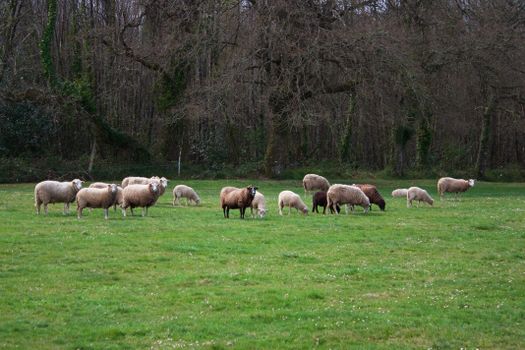
Lo achsar sits at the end of the first verse and it is where most English readers lose something. Lo is the negative. Achsar comes from a root to do with lacking, coming short, being left without. One writer working through the Hebrew meanings explains the phrase as "I shall not lack anything."
What the line does not say is that nothing hard will happen. The valley comes later in the psalm, and the psalm does not pretend otherwise. What it says is that the flock will not come up short. There is a difference between a life without trouble and a life without deficit, and Hebrew keeps the two apart with two words.
Deshe, and the Move From Pasture to Water
Verse two gives the picture almost everyone remembers: "He maketh me to lie down in green pastures; He leadeth me beside the still waters." The Hebrew behind green pastures is deshe, which has to do with grass and tender growth rather than a neat lawn. It is the kind of green a hungry animal actually eats.
Notice the order the verse keeps. Rest comes before water. Food comes before movement. Anyone who has burned out in ministry or in work or in a long season of caring for someone else will recognise the sequence. The shepherd does not lead a spent flock straight into the next thing.
Yahweh, and the Turn to "Thou Art With Me"
Psalm 23 opens with the Hebrew word Yahweh. One study of the text counts twenty-six words between that opening name and the moment the poet stops describing God in the third person and speaks directly to him, saying "Thou art with me." The exact count depends on the edition you are reading from, so treat it as an observation rather than a rule.
The turn itself is the hinge of the psalm. Everything before it is testimony about what God does. Everything after it is address, spoken to God's face. That is why the psalm holds up in a hospital corridor. It does not stay in the language of description forever.

L'ma'an She'mo, For the Sake of His Name
The psalm gives a reason for the shepherd's guidance, and it is not a flattering one for the sheep. The Hebrew expression l'ma'an she'mo means "for the sake of his name." God leads in right paths because of who he is, not because of what we have managed to deserve.
I find that easier to live with than the alternative. If my standing depended on my performance, I would be in trouble by Tuesday. The psalm anchors guidance in God's own name, which is a far more stable thing to lean on than my consistency. It also means the leading does not stop when I wander.
Light, Faith and Love Underneath the Psalm
Three Hebrew words sit beneath a psalm like this one even when they are not printed on its surface. They are part of the vocabulary a Hebrew reader carries into the text.
- Or, אוֹר, is light. It is the word behind the first thing God speaks into being, and it carries the sense of clarity and exposure rather than mere brightness.
- Emunah, אֱמוּנָה, is usually translated faith, but it leans towards faithfulness and steadiness, the quality of something you can put weight on.
- Ahavah, אַהֲבָה, is love. It is not sentimental. In scripture it behaves like commitment, the kind that keeps showing up.
Read the psalm with those three words in view and the pasture stops being a postcard. It becomes a place where a steady shepherd, in plain light, keeps loving a flock that cannot keep itself.
Reading Mizmor Kaf Gimmel Out Loud
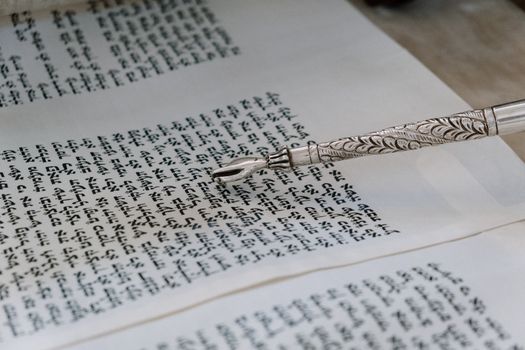
Hebrew is built to be heard. There are recitations of Psalm 23 in Hebrew available to listen to, and the psalm is read and recited in both Jewish and Christian devotional settings. If you have only ever read it silently, listening to it once in Hebrew is worth the ten minutes, even if you catch nothing but the rhythm.
What surprised me was how much of the meaning survives without translation. The opening line lands like a hand on a shoulder. You do not need the vocabulary to hear the tone.
The PS23 Premium Hebrew Collection
The PS23 Premium Hebrew collection is our attempt to carry these words out of the study and into an ordinary day. The words are the point, not a pattern. The range includes unisex and oversized fleece hoodies, Essential heavyweight crewneck sweatshirts, women's mock-neck fleece crew sweatshirts, waffle knit t-shirts with Hebrew designs, and a cropped half-zip cut. The full range is at /collections/hebrew.
I wear the heavyweight crewneck more than anything else in my wardrobe, mostly because nobody asks me what it means and I get to decide when to say. That is a small thing. It also happens to be how most conversations about faith actually start, sideways and unhurried, with someone reading a word off your chest and asking a question you were not expecting.
A portion of every sale goes to benevolent causes. That was a non-negotiable from the beginning, because a brand built on a psalm about a shepherd who provides for a flock has no business keeping everything for itself.
Frequently Asked Questions
How do you say Psalm 23 in Hebrew?
Psalm 23 is commonly called Mizmor Kaf Gimmel, which spells out the number twenty-three using Hebrew letters rather than digits. The opening line reads מִזְמור לְדָוִד ה׳ רֹעִי לֹא אֶחְסָר, and English Bibles translate it as "A Psalm of David. The LORD is my shepherd; I shall not want." Psalms as a whole are known in Hebrew as Tehillim.
What does lo achsar mean?
Lo achsar closes the psalm's first line and is usually translated "I shall not want," or in some versions "I lack nothing." The Hebrew carries the sense of not coming up short and not being left without. It is a statement about the shepherd's provision rather than a promise that life will avoid hard seasons.
Is Psalm 23 part of the Tehillim?
Yes. Tehillim is the Hebrew name for the book of Psalms, and Psalm 23 is counted among the most comforting and best known of them all. It is also described as revealing the attributes of God as the Good Shepherd, which explains why it appears so often in both Jewish and Christian devotional life.
Why does PS23 print Hebrew on clothing?
The Hebrew words are the point rather than the decoration. PS23 designs around scripture, especially Psalm 23, and a portion of every sale is given to benevolent causes. The Premium Hebrew collection takes the words covered in this article and puts them on fleece hoodies, crewneck sweatshirts and waffle knit t-shirts.
Do I need to read Hebrew to understand the psalm?
No. The psalm has carried people through grief and fear in English for centuries, and it will keep doing that. Knowing a handful of the original words simply adds texture and gives you somewhere to stand when a familiar phrase has gone flat. Reading it in Hebrew is a supplement, never a requirement.


